UNAUTHORIZED CIRCULATION. Poison Hemlock Publishing, independent publishers.
Co-authored and designed by the STEMinist Witch and the Hexecutive Witch. (Real names concealed due to risk of persecution)
Issue Nº 001 · Friday 13 November 2026 · The Nightshade Issue ·
The Almanac: First things first: The moon: new on Monday 9 November (a very special date for me for personal reasons), now a waxing crescent, about 17% lit. First quarter lands Tuesday 17 November. The sky: the Leonids (meteor shower) peak the night of 17 to 18 November, best between 2 and 4 AM, roughly 10 to 15 an hour, and the moon sets before the show, which is the one favour it has done us all month considering how pissy everyone has been lately. Full moon is Tuesday 24 November. The wheel: Samhain was two weeks ago, so the veil is still thin and the leftovers are still on the counter, at least for some people.
Dearest curious reader,
I’ll be referring to you as a witch in the coming editions because I assume that’s why we’re all here, the curiosity and wit of someone who wants to understand, advance and learn.
The idea behind this publication started forming when you enjoyed my content about the history and intersection of witchcraft and spirituality so much that you made those reels go viral and reach over 7 million viewers. That made me stop and wonder to myself, how much of this is buried so deep that it’s craving to see daylight, or moonlight, whichever is your preferred reading mode.
So here we are, a few months later, now that I’ve partnered with an incredibly artistically inclined witch who goes by @thehexecutive witch to bring this vision to life to you together. You’ll be getting me as your author and researcher and Trish as your artist, though you’ll absolutely see some of her writing too along the way.
Each edition will have a plant and creature as its main focus; and do read till the end as there’s a special surprise that’s launching for your eyes first, because like I mentioned earlier, I’ve been keeping a very close eye on your requests in my comments and DMs. And read till the end for the different Arcane Athenaeum memberships, and if you can't wait, click below to jump ahead. Now let’s dive in.
The Plant That Was Blamed for Everything (and Also Saves Lives in Hospitals)
Somewhere in a hospital tonight, a nurse is drawing up a dose of a molecule named after the Fate who cuts the thread of your life. Nobody is calling her a witch. Hold that thought.
I know you know what’s about to happen: yes, I am about to defend a poison. Hold on though, because it’s not really the poison that’s getting a defence attorney, it’s the record, which is a different thing, and by the end of this issue I know you will want the receipts too.
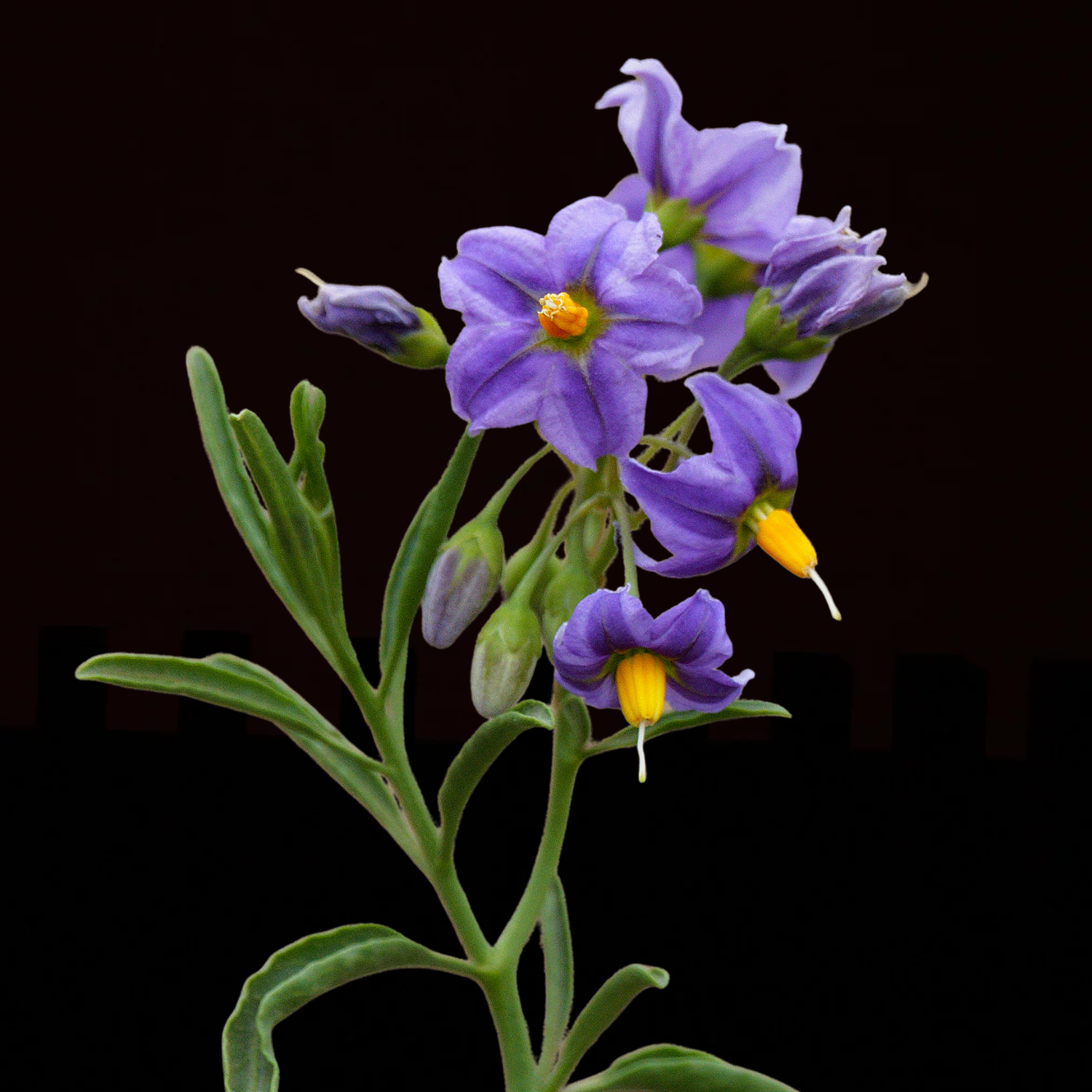
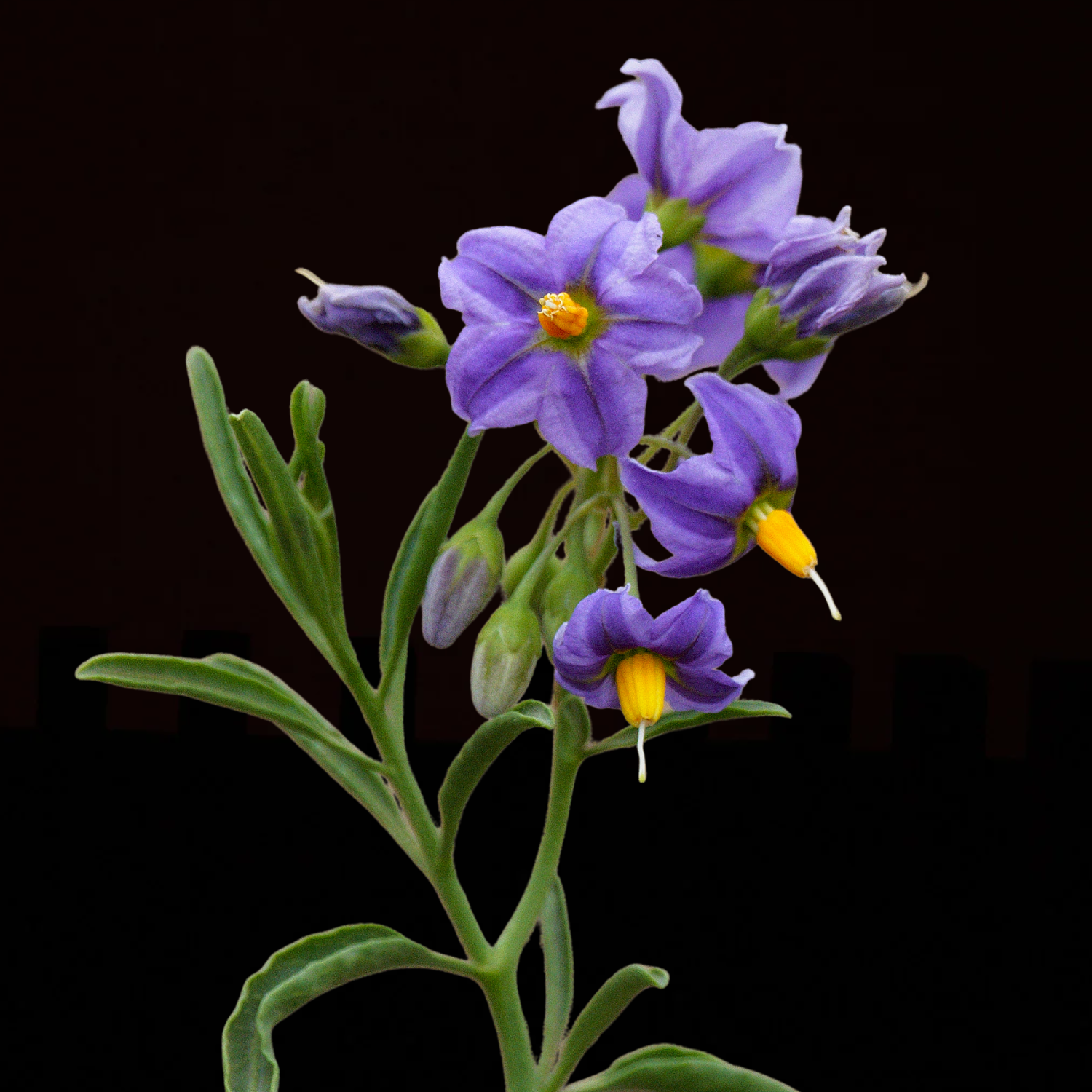
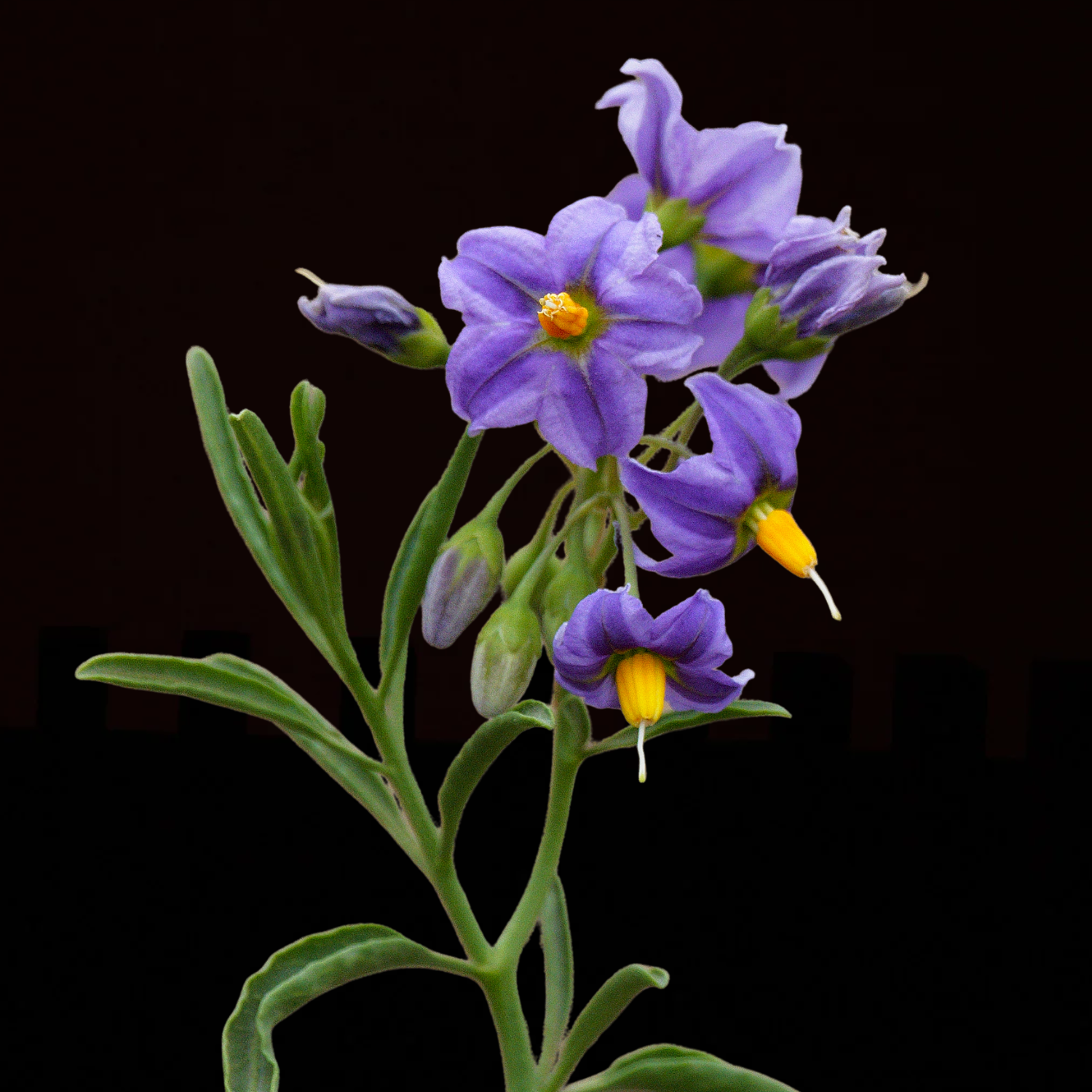
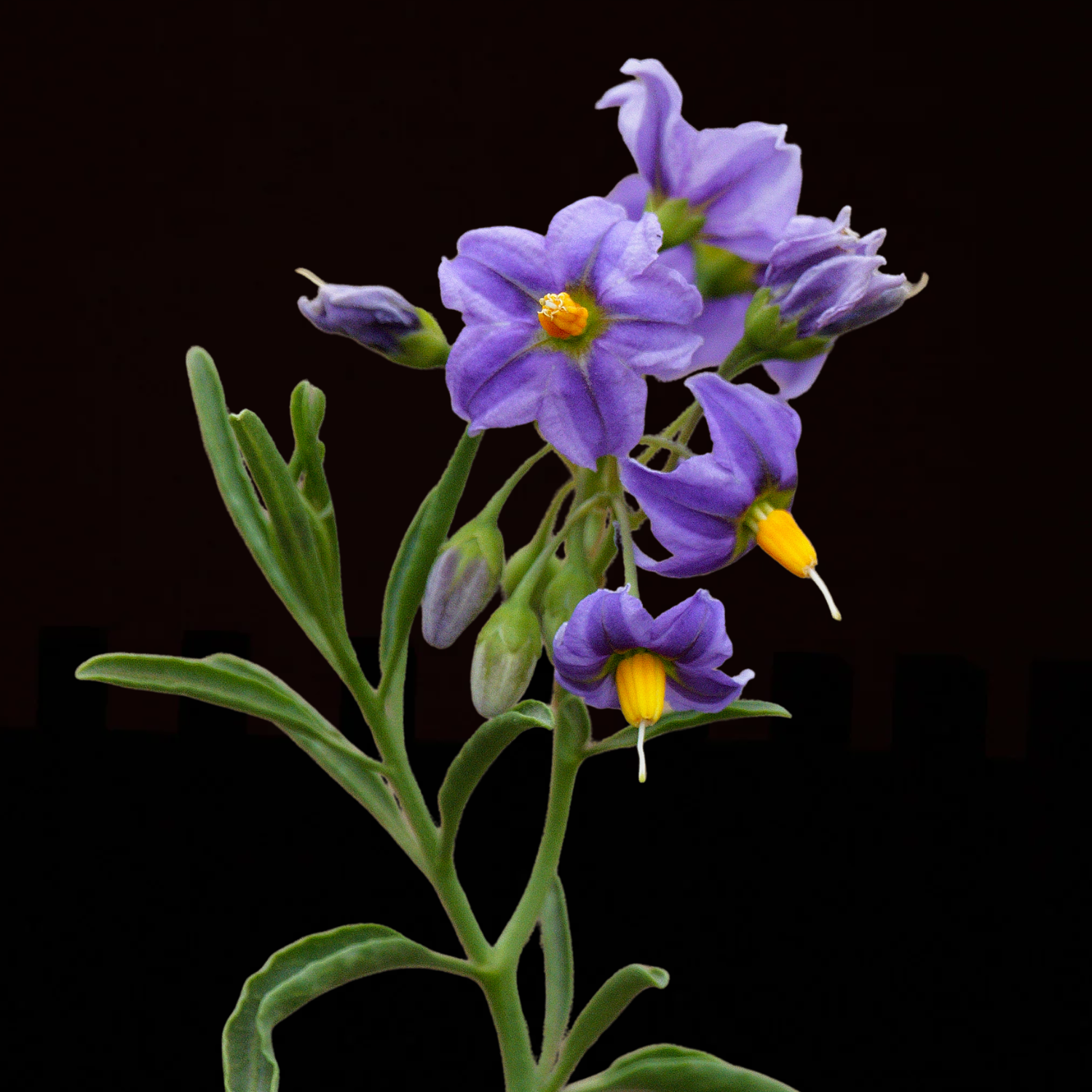
The plant. Atropa belladonna, deadly nightshade, a quiet, dark-berried member of the nightshade family. Its leaves, roots and berries carry three alkaloids: atropine, scopolamine and hyoscyamine. They jam the receptors that carry your body's rest-and-digest signals. Medicine even has a rhyme for what that does to a person, and I love it more than I should: hot as a hare, blind as a bat, dry as a bone, red as a beet, mad as a hatter. Fever, enormous black pupils, skin like paper, a person talking calmly to people who are not there. The lore is magnificent for this one.
Read that list again as a ghost story because it might as well be one. The textbook and the grimoire are describing the same symptoms, and they only disagree about whose fault it is.
The medicine. The same molecule that can poison you sits in ambulances, ophthalmology clinics and military kits. Atropine speeds up a dangerously slow heart. It is the antidote to nerve agents and organophosphate pesticide poisoning. Ophthalmologists use it to widen the pupil, which is, I think, the best part of the whole story, because that is the history of how nightshade got its more common name. Bella donna is Italian for "beautiful woman," and the likelier theory is that Renaissance Venetian women put the berry juice in their eyes to look wider and softer. (A rival theory says a berry tonic gave them a blush. I'm told it is the less likely one, and I am choosing to believe the eye drops.)
Back to the medicine part, because it has been used in that capacity for a long time. In 1803 the Edinburgh physician Andrew Duncan described powdered leaf or root for epilepsy, mania and melancholy. By the 1950s, belladonna plasters were sold over the counter for rheumatism and more. Atropine itself was isolated in the early 1800s (one source says 1813, another credits the pharmacist Mein with pure crystals in 1831, so I am staying vague on purpose, which is a topic for another day). Most importantly from this story is that the difference between a remedy and a murder weapon is a measuring spoon, and somebody finally learned how to measure, or so we are lead to believe.
The guardian. Every issue gets a magical creature, and this one's is a bird. A very old, very unpleasant bird called the strix. I will introduce her properly in the Index, and then she will come back to haunt the Cold Case, because she turns out to explain the entire phenomenon per se.
So the question for this issue is not "magic or science?" The plant has already answered that: both, in the same molecule, at the same time. The real question as it seems to always Bol down to is who got to write the label.
(Botanical medicine is a real field and a long one. Nothing in this issue is a recommendation to touch this plant. Not the leaf, not the berry, not "just a little.” Remember that this is poison.)
The Witch’s Index
A field guide in three entries.
The name. Atropa is linked to Atropos, the Fate who cuts the thread of life. Linnaeus gets the credit for the formal name in the 1700s of the plant named after the scissors. Subtle, Linnaeus.
Dwale. The Middle English word dwale meant deadly nightshade, a sleeping draught, and also a stupor, a delusion, a deceiver (from Old Norse dvala, sleep, and Old English dwala, error). That is a lot of weight for one syllable, if you ask me. There is a famous medieval recipe called dwale, for a drink given before surgery. A 1999 BMJ article by the anaesthetist Anthony Carter lists a typical one: boar or sow bile, hemlock, bryony, lettuce, opium, henbane and vinegar, three spoonfuls in a potel of wine. If you look closely, there’s no nightshade. The plant lent its name to the sleeping drink in some usages, but the best-known recipe never used it. Carter called the business "dangerously unpredictable," and he thinks ordinary housewives, not surgeons, were the ones mixing it, because it turns up in household remedy books rather than in medical texts. History left the women out of the footnote, as usual.
The strix. The Romans told stories about the strix, an owl-like bird of ill omen that fed on the flesh and blood of infants. Ovid describes it as having a big head, hooked beak and greyish wings. Pliny the Elder, a man who believed a great deal, shrugged and said nobody could even tell which bird was meant. A later Latin glossary used the plural to mean "witch-women," and the word walked into Italian as strega, "witch." The bird became the woman. Keep that sentence in your pocket.
The Lore Desk
The sources use a word I am going to borrow: allegedly. I find this quite fitting and amusing.
Allegedly, the witch Circe turned Odysseus's men into pigs with nightshade.
Allegedly, a drink that induced trance went into the cult of Dionysus.
Rumoured, Livia poisoned Augustus with it. Supposedly, Roman soldiers tipped arrows with a paste of it, and Macbeth spiked the liquor of invading soldiers.
Reportedly, parents told children the berries would show them the Devil. (That one I believe. It works on every child. This is not parenting advice.)
Modern witchcraft often pairs belladonna with Hecate and the boundary between worlds. I am still hunting the older source for that pairing, so file it under "what people practise today" rather than under history. That is a topic for another day.
In this paper we talk about the lore, the science, the history, the spirituality and the intersection.
The Forbidden Files: You’re all wondering by now: were Women actually using Nightshade?
This is a question repeated often under nightshade reels I have posted: so was this the herbalist's secret, the midwife's tool, the witch's whole pharmacy?
I so wanted that to be true and I went looking. So let me share my findings with you, and where the evidence runs thin.
(Unfortunately, this is not the plant that will showcase the knowledge women had, even if they were still persecuted because of it. I like to keep it honest.)
Who the record shows prescribing it. Men. The Edinburgh physician Andrew Duncan, in 1803. The pharmacopoeias, the plasters sold over the counter into the 1950s. A medical journal article from 1891 titled "Belladonna in Labor," which I could find only as a scanned page. Doctors wrote belladonna down, and the doctors' version is the one that survived.
What the women's medicine of the period looked like. The Trotula is the most influential medieval text on women's health, a compendium of three texts from Salerno. Trota, the healer it is named for, was a real practitioner and likely wrote one of them. The other two were possibly written by men. Her remedies for a hard birth include mallow, fenugreek, mint and wormwood. Pennyroyal and mugwort come up again and again. I did not find belladonna in the summary I read, and a museum summary is not encompassing of the manuscripts, so file that under "not found," rather than "not there."
So, did women use belladonna for remedies? Some probably did, as part of the household medicine that never made it into print, and I cannot find an actual source that proves it, unless you have a grandma or great grandma who specifically passed on that knowledge to you, and you’re happy to share. What I can prove is that men prescribed it, men sold it, and men wrote down what women supposedly did with it.
The legend gives women a pharmacy. The record gives them a footnote. If that makes you angrier than the legend does, good: it should.

The Craft
What Does a Witch Do With Poison? (Answer: Nothing Reckless)
Here is the rule of this paper, and it is the only rule that matters: none of the rituals require anything poisonous and please stay away from poisonous plants. Any information shared is for educational purposes only and never a medical recommendation. If anyone swallows any part of a poisonous plant, call your local poison control or emergency number immediately. The magic here is symbolic, and I promise it is no weaker for it.
The Rite of the Month: Returning the Blame
You need a sheet of paper, a pen, a candle and a stand-in object (a black bead is perfect).
Write the accusation. On the paper, write one thing a woman was blamed for in the paperwork: a cow's death, a sick child, something that was almost certainly an illness or an accident.
Name who recorded it. Beside it, write who set it down: the physician, the magistrate, the author. This is the part history usually leaves blank.
Return the blame. Fold the paper toward the recorder's name, not hers. Say one line that you write yourself.
Put out the lamp. Burn the candle for a slow count of thirteen, then snuff it.
Close the file. Tuck the paper into a book, or let it go.
That is a rite of my own devising, built from the research in this issue.
Now as for the Phoenician spell, that’s a surprise inside the Peculiar Post. And in case you are wondering what that is? Click below to find out. Peculiar Post members get: Cut the Unspun Thread, which is a spell in three parts.
Cold Case Nº 001, Part One
Did Anyone Ever Fly on a Nightshade Ointment?
The file is thick, and I am going to lay it out for you.
Exhibit A, the chemistry. Belladonna and its cousins contain tropane alkaloids that absorb through the skin and can cause hallucinations, according to the Emory ethnobotanist Cassandra Quave.
Exhibit B, the doctor's report. According to the US Forest Service, the 16th-century physician Andres de Laguna, doctor to Pope Julius III, reported that a green ointment taken from a witch contained hemlock, "salanum" (probably a nightshade), mandrake and henbane. One physician's report is not a lab result, but it is a clue, and a clue is where a cold case starts.
Exhibit C, the recipe. A 1977 review in the journal Folklore by Clive Harper, as reported by the Boston Globe, found seven typical ingredients: deadly nightshade, aconite, sweet flag, cinquefoil, smallage, bat's blood and children's fat. Harper concluded it would make a potent hallucinogen. The Globe adds, with a dryness I admire, that it "probably didn't allow witches to fly.” Darn it.
Now the defence's best witness. A historian writing in The Conversation argues that witch flight was a medieval invention that was first written about in the early 1400s and first drawn in 1451. The ointment details, they note, rarely come from the accused. They come from the authorities who recorded what the accused "said," often under torture, most likely rewritten.
And, remember the bird. The strix started as a creature of the night that fed on infants, and over a few centuries of Latin the same word came to mean the women who were accused of being the creature. Started as a monster, then became a label, ended up being your neighbour. The ointment follows the same road: first a recipe somebody wrote down, then evidence, then a woman's name beside it.
So the chemistry is real, the confessions are suspect, and the best eyewitness accounts of flying ointment come from doctors who were not in the room when anyone flew. Something is missing from the file. I will tell you what it is next month.
(Cold Case Nº 001 continues in December.)

This Keeper's Confession: Blame the Paperwork.
I went looking for the woman who flew on nightshade, and I found a lot of men writing about her.
That is not a conspiracy theory, dearest curious reader. It is a footnote. Belladonna was real, the delirium was real, and yes, some of the women knew their botanical medicine (and some, I am sure, simply knew a neighbour who did). But the story of the poisoner, the ointment and the broomstick was told, recorded and shaped by physicians, inquisitors and authors with a thesis.
You know this feeling, I think. You have been described by someone who was not in the room: the colleague who summed you up in a meeting you were not at, the relative who told your story at a table you were not sitting at, the version of you that exists in someone else's model of the world and has never once been asked. (The strix never got a say either. Neither did the woman who inherited her name.)
I will conclude as I started, I’m not defending the poison, it clearly is poison. I am bringing to your awareness you that every time you read a sentence that begins "witches used belladonna to," you should ask who is speaking, and whether they were there.
Letters to the Keepers:
1. Dear Keeper, can I make nightshade tea for the ritual? It is all over my feed. Yours, Curious in Cleveland.
No. Absolutely not, and I am capitalizing this on purpose: DO NOT. Every part of the plant is poisonous and the alkaloids absorb through skin. Do not touch, ingest, smell or even get close to the plant. Use the black bead and a candle and keep your kettle for tea (from our membership box) that will not stop your heart.
2. Dear Keeper, did women really fly? Yours, Skeptical in Salem.
No evidence that they did. A great deal of evidence that men wrote that they did. See Cold Case Nº 001. I do have some commenters’ eye witness accounts though of some of the women in their families flying, so debate remains open.
The Heresy Report
Is belladonna "the witch's plant"? That is a modern label, and historians doubt the accused wrote the recipes. In fact, it seems like many historical accounts, the accusation was always the confession, as it seems mostly men prescribed the deadly doses of nightshade.
Next issue (13 December): Mistletoe, the Yule Cat, and the kiss that could kill you. Spoiler alert! The Yule Peculiar Post comes with bells.
Keep it unauthorized, my curious readers.
